
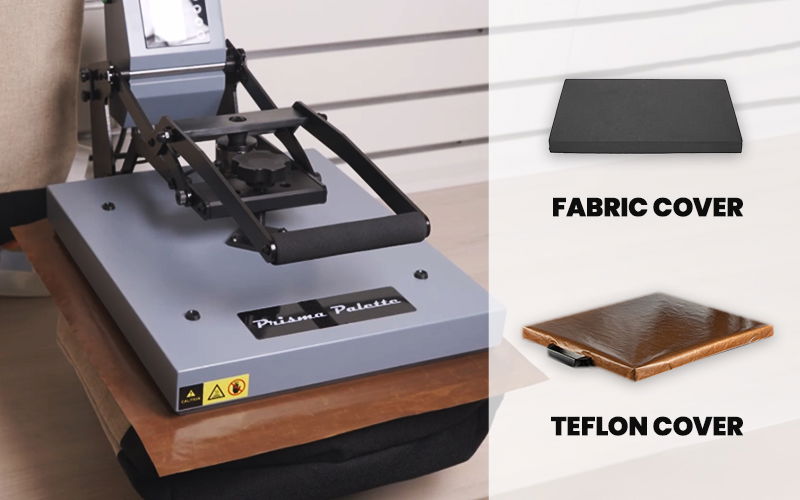
Heat pressing is a crucial step in heat transfer printing techniques, and using the right tools and skills is vital for achieving optimal results. While most users recognize the importance of a Teflon sheet, the significance of a heat press cover often goes unmentioned. In this post, we will delve into what a heat press cover is, its importance, and how to select the right cover for your specific projects.
What’s Heat Press Cover?
A heat press cover is a protective layer usually placed over the lower platens of a heat press machine. It helps to prevent direct contact between the lower platen and the transfer materials.
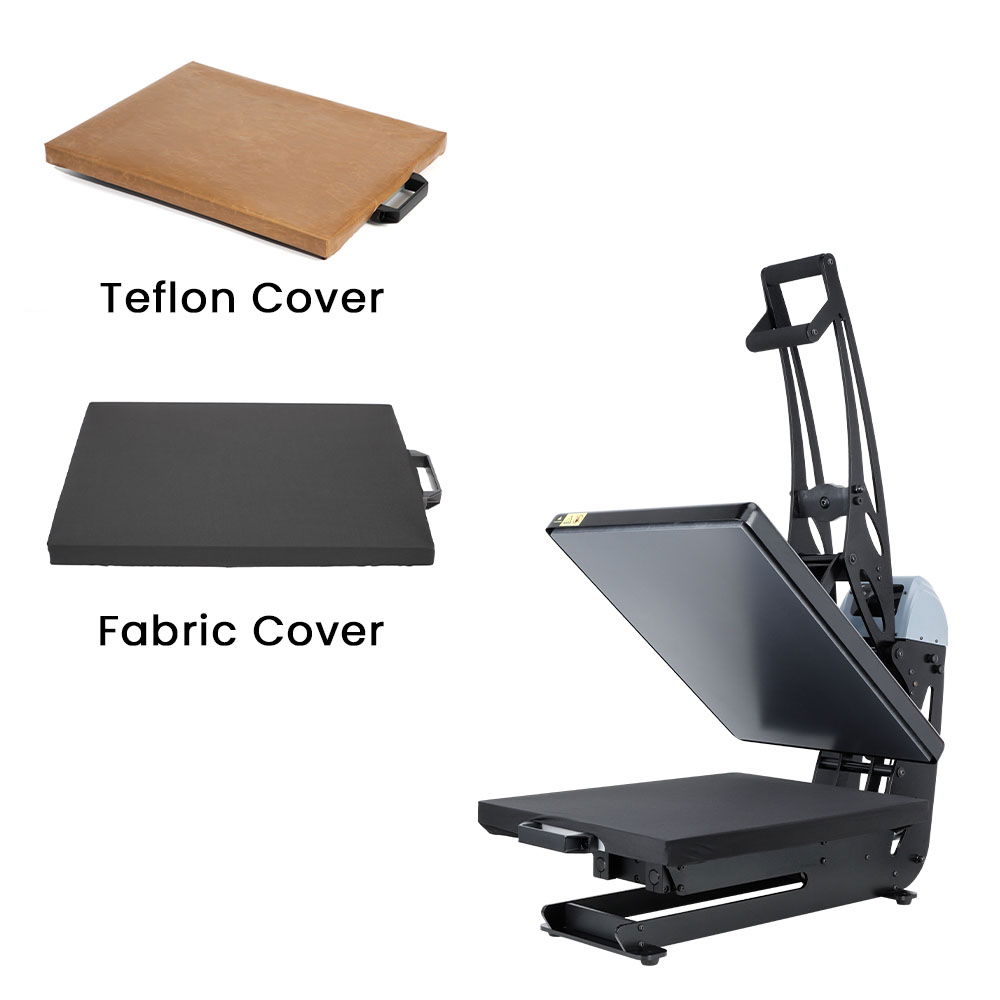
Why is the heat press cover typically used on the lower platen rather than the upper one? There are three main reasons for this. Firstly, users often apply a Teflon sheet or other protective paper on the upper platen, which provides adequate protection for both the upper platen and the substrates. Secondly, the upper platen is the main source of heat; using a cover here could obstruct heat transfer, leading to ineffective printing results. Lastly, many suppliers, including Galaxy Press, coat the upper platen with a material similar to Teflon, which enhances heat transfer efficiency while making it easier to clean and maintain the platen.
Why Heat Press Cover Is Essential?
Heat press cover is essential to protect the platen from direct exposure to transfer materials and residue. Unlike a Teflon sheet, which is typically used on the upper platen to prevent sticking and ensure even heat distribution, the lower platen cover safeguards against potential damage, such as scratches or adhesive buildup. It also helps in maintaining the cleanliness of the lower platen, which can impact the quality of the prints and prolong the lifespan of the equipment.
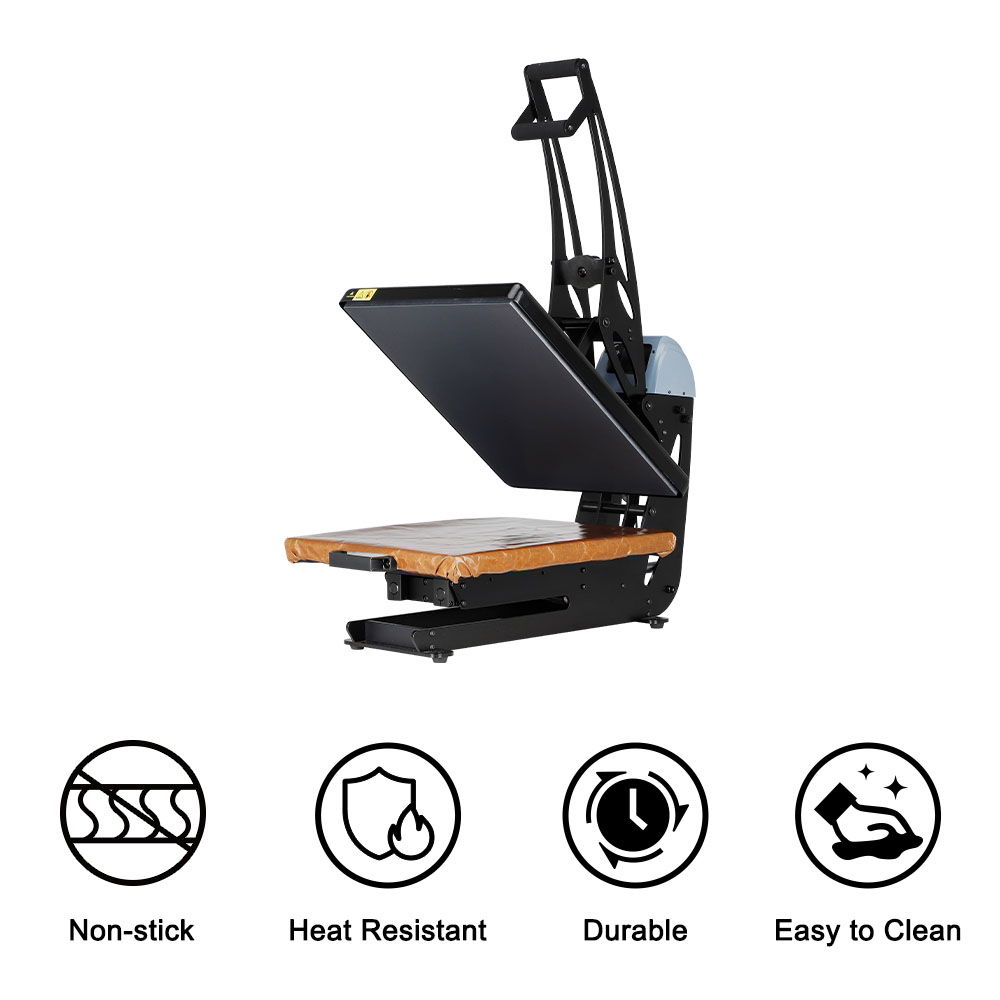
Another crucial reason for using a heat press cover on the lower platen is to prevent residue patterns from previous projects from affecting future prints. This is particularly important for substrates that need to be placed face down on the lower platen, such as photo slates or glass cubes, which require a longer pressing time at lower temperatures for optimal results. Without a cover, any leftover residue or adhesive from earlier prints could transfer onto the new substrate, potentially compromising the quality of the print. By using a cover, you ensure that the lower platen remains clean and free from contaminants, thereby protecting the integrity of each new project.
How to Choose the Right Heat Press Cover?
Choosing the right heat press cover is a relatively straightforward process, with a few key factors to consider to ensure optimal performance. The most important aspect is the material of the cover.
There are primarily two types of heat press covers available: fabric covers and Teflon covers. Fabric covers are designed mainly for apparel decoration projects. They are ideal for allowing moisture in the fibers to evaporate efficiently, which can enhance heat transfer and prevent issues like uneven printing or steam marks. This makes them suitable for textiles and garments. On the other hand, Teflon covers are more versatile and can be used with a wide range of substrates. They offer excellent non-stick properties and heat resistance, making them a great choice for various materials beyond textiles, such as ceramics, metal, and glass. Teflon covers also help in easy cleanup and extend the life of your heat press by protecting the platen from residue and spills.
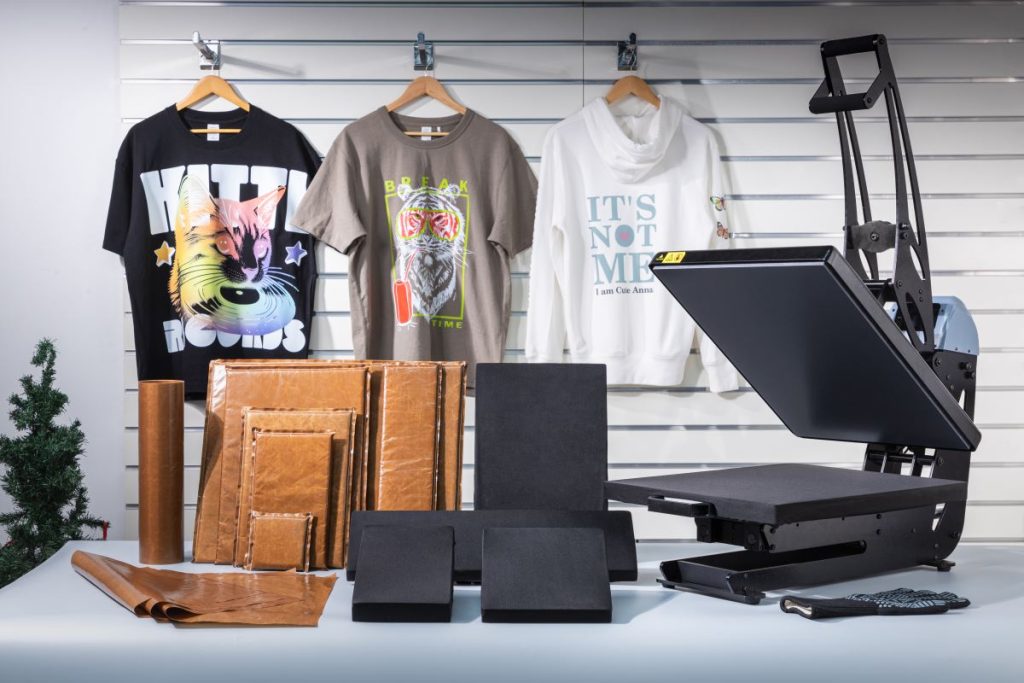
When selecting the ideal heat press cover for apparel decoration projects, it’s important to consider more than just the material. Another key factor is whether your heat press machine features a slide-out drawer. If your machine includes this functionality, you’ll need a heat press cover designed with cutouts or holes. These openings allow the handle to extend through the cover, facilitating easier operation and access. Without these necessary cutouts, you may find it challenging to use the slide-out drawer effectively, which can impede your workflow and affect the quality of your prints. Therefore, ensure that the cover you choose is compatible with your machine’s design to maintain smooth and efficient operation.
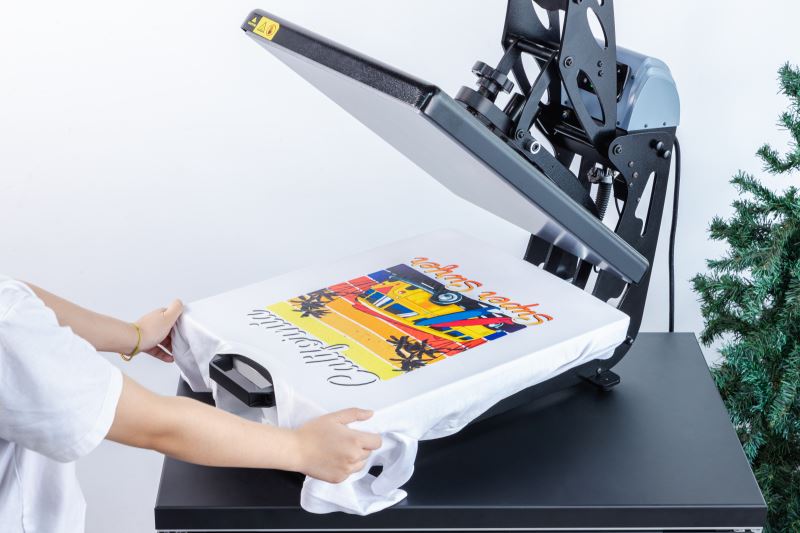
In addition to material and cutouts, selecting the right size for your heat press cover is crucial for ensuring a perfect fit with your machine. The size of the cover should correspond precisely to the dimensions of your heat press platen to provide effective protection and optimal functionality. For those considering wholesale or retail options, starting with popular sizes like 16″ x 20″ and 15″ x 15″ can be a strategic move, as these are among the most sought-after sizes in the market.
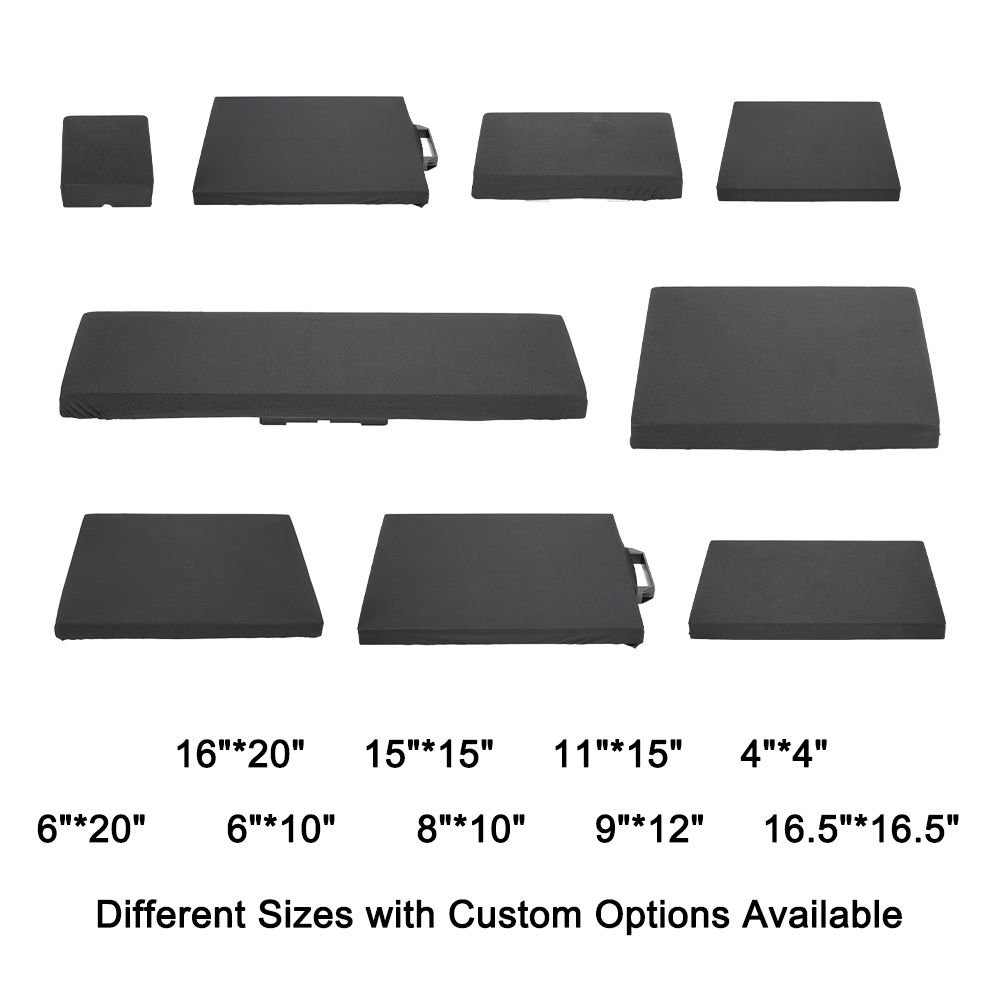
If you’re looking to minimize both risk and costs, another option is to source fabric and Teflon rolls or sheets and customize the sizes as needed. This approach allows you to tailor the covers specifically to customer orders, reducing inventory costs and avoiding overstock. By cutting and sewing the covers only when an order is received, you can offer a range of sizes while managing your expenses more effectively.
Conclusion
In summary, a heat press cover is an indispensable tool for ensuring the longevity and quality of your heat transfer projects. By shielding your lower platen from residue and enhancing the efficiency of your heat application, it plays a critical role in achieving professional results. When selecting a cover, consider both the material and size to match your specific needs, whether you’re working with textiles or a variety of other substrates. For optimal performance and durability, invest in a high-quality heat press cover tailored to your projects.





Comment(01)
Please contact me, i need some info about your product fabric cover heatpress.
whatsapp or wecaht +393402247917
Let me know thanks.
Matteo