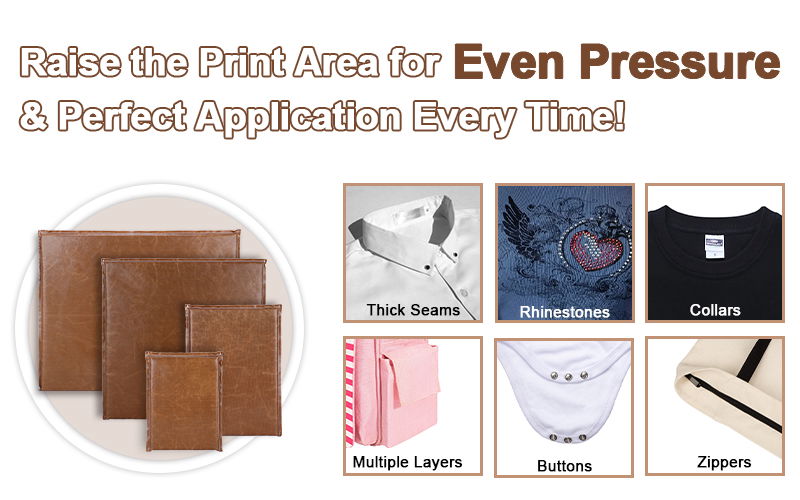
If you’ve been in the customization business for a while, you’re likely very familiar with heat press machines. While heat presses are essential tools for thermal transfer and customization printing, one of the biggest challenges is achieving consistent pressure and prints on uneven garments. This is where heat press pillows come into play and why they are considered must-have accessories, especially for garment customization. In this post, we’ll explain why heat press pillows are so important, when to use them, and how to use them effectively. Keep reading to discover how to elevate your printing game with heat press pillows.
What are heat press pillows?
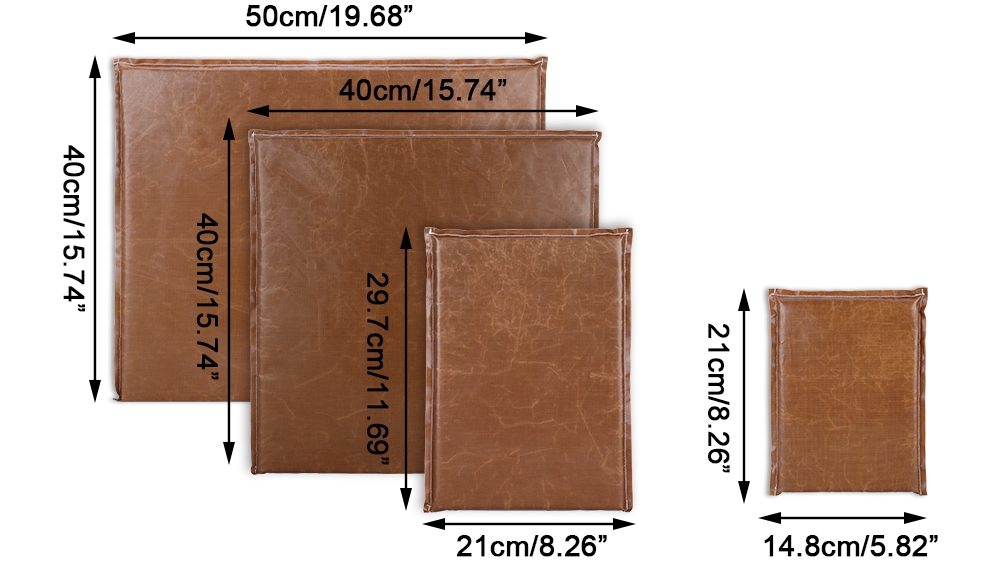
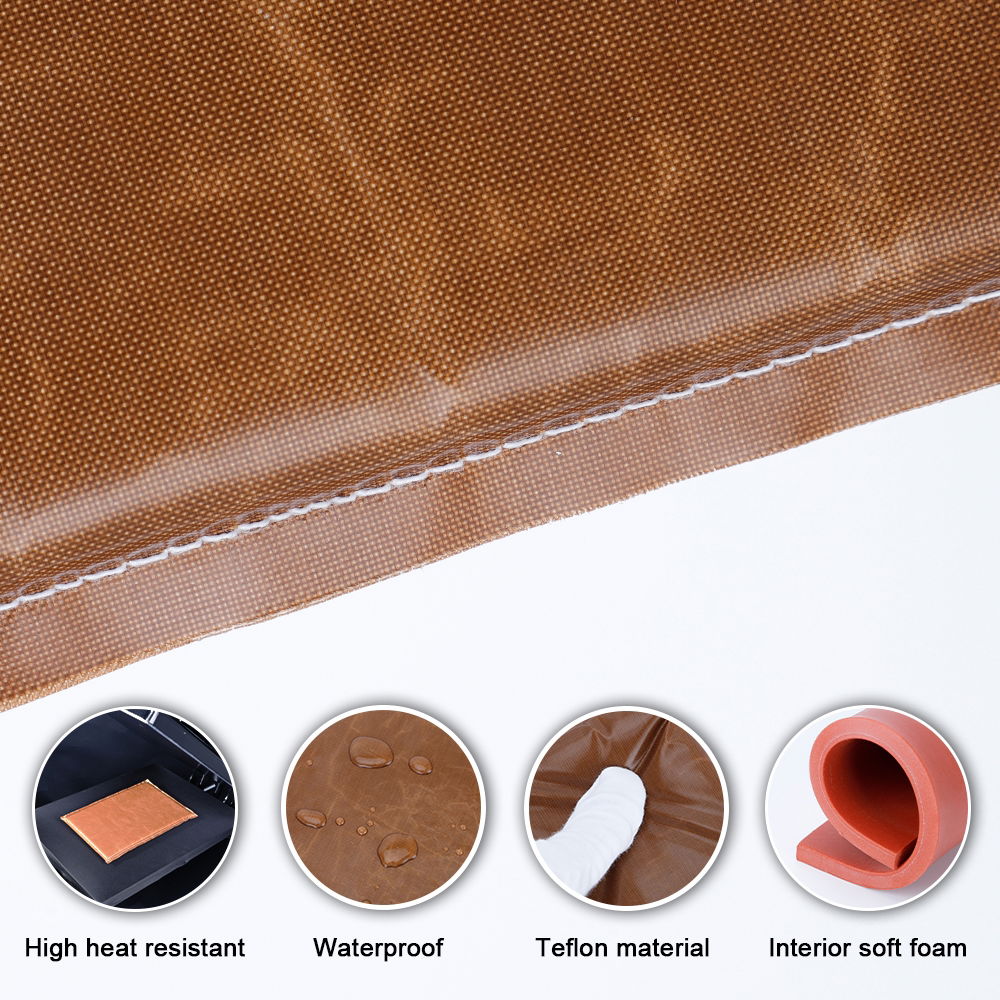
Heat press pillows are specially designed for use with heat press machines to facilitate thermal transfer. They typically consist of a heat-resistant Teflon sheet as the pillow cover and fire-resistant foam filling to enhance cushioning, thereby improving heat transfer quality on a variety of materials. These pillows come in different sizes tailored to accommodate different substrate requirements, with popular sizes such as A4, A5, 16″ x 20″, and 16″ x 16″.
Why are Teflon pillows must-have for garment customization business?
Why does your business need heat press pillows?
For garment decoration businesses, heat press pillows are a cost-effective solution that can greatly enhance your heat pressing experience and results. The mainly purpose of using any heat press pillows is to achieve even heat and press distribution specially for uneven substrate surfaces. For example, When decorating garments with seams, zippers, buttons, or other uneven features, heat press pillows elevate the area of the garment being pressed. This ensures that these features do not interfere with the heat transfer process, maintaining a smooth and even application. If heat press pillows are not used, the following issues might occur during garment decoration:
- Incomplete Transfer: Complex designs or fine details may not fully transfer onto the garment, resulting in incomplete or faded prints.
- Fabric Scorching: Delicate fabrics like polyester can scorch or develop shiny spots when exposed directly to the heat platen.
- Peeling or Lifting: Without sufficient pressure, transfer materials may not adhere properly to the fabric, leading to peeling or lifting of the design after washing or wearing.
Apart from ensuring even heat and pressure distribution, another benefit is providing protection for garments, especially those made with thin fabrics. Teflon pillows are typically placed between garment layers to act as barriers. This effectively prevents ink from the printing layer from penetrating through thin fabrics, thereby avoiding marks or imprints on the bottom layer of the garment. Additionally, they prevent both layers from sticking together due to heat and pressure during the transfer process.
What printing techniques to use heat press pillows?
Many users first encounter heat press machines when they begin using sublimation printing techniques. Consequently, many may initially perceive heat press pillows as exclusively for sublimation printing. However, the reality is that sublimation is just one of many applications for heat press pillows, as heat press machines are utilized across various printing techniques. Essentially, whenever a printing technique involves thermal transfer and necessitates the use of a heat press machine, heat press pillows play a supportive role.
- Sublimation Printing: One of the most popular digital printing techniques used by customization business runners for small to medium-sized businesses is sublimation printing. Heat press pillow helps ensure even pressure and heat distribution during the transfer process. This is crucial for achieving vibrant and durable prints on various substrates, as sublimation requires precise conditions to effectively bond the dye with the material.
- DTF Printing: DTF printing is a rapidly growing digital printing technology tailored for textile applications. Heat press pillows play a crucial role in DTF printing because garments often feature seams, zippers, and buttons that necessitate even pressure across the entire printing area.
- White Toner Printing: White toner printers are versatile, capable of printing on both fabrics and hard surfaces. They require heat press machines for the final step of heat transfer. A pressing pillow can be incredibly useful, especially when dealing with uneven fabrics and surfaces.
- HTV (Heat Transfer Vinyl): HTV is preferred choice for DIY users to perform garment decoration. Using a heat press pillow with HTV ensures better adhesion, reduces the risk of heat press marks, and improves the durability and appearance of the final product.
- Screen Prints: Screen printing remains a primary technique for garment printing, where fabric ink applied through this process requires specific temperature and time settings to ensure durability and washability. The inclusion of a heat press pillow helps achieve professional and durable prints by reducing imperfections, ensuring optimal heat transfer, and effectively curing the ink onto the garment.
How do heat press pillows work for thermal transfer?
Heat press pillows feature a heat-resistant Teflon sheet cover that is highly resistant to leaving imprints or marks and is easy to clean. The interior foam is made from fire-resistant materials, ensuring flexibility and durability for long-lasting performance. This flexibility allows the Teflon pillow to efficiently elevate the printing area, ensuring optimal contact between substrate surfaces and the heating platen for superior printing results.
Typically, a high-quality heat press pillow can last for years with proper use and maintenance. It’s important to regularly inspect them for signs of wear, such as thinning or tearing, as these can impact the quality of the heat transfer. If any wear is detected, users can easily find replacement pillow fillings from online stores.
When to use teflon pillows for heat press?
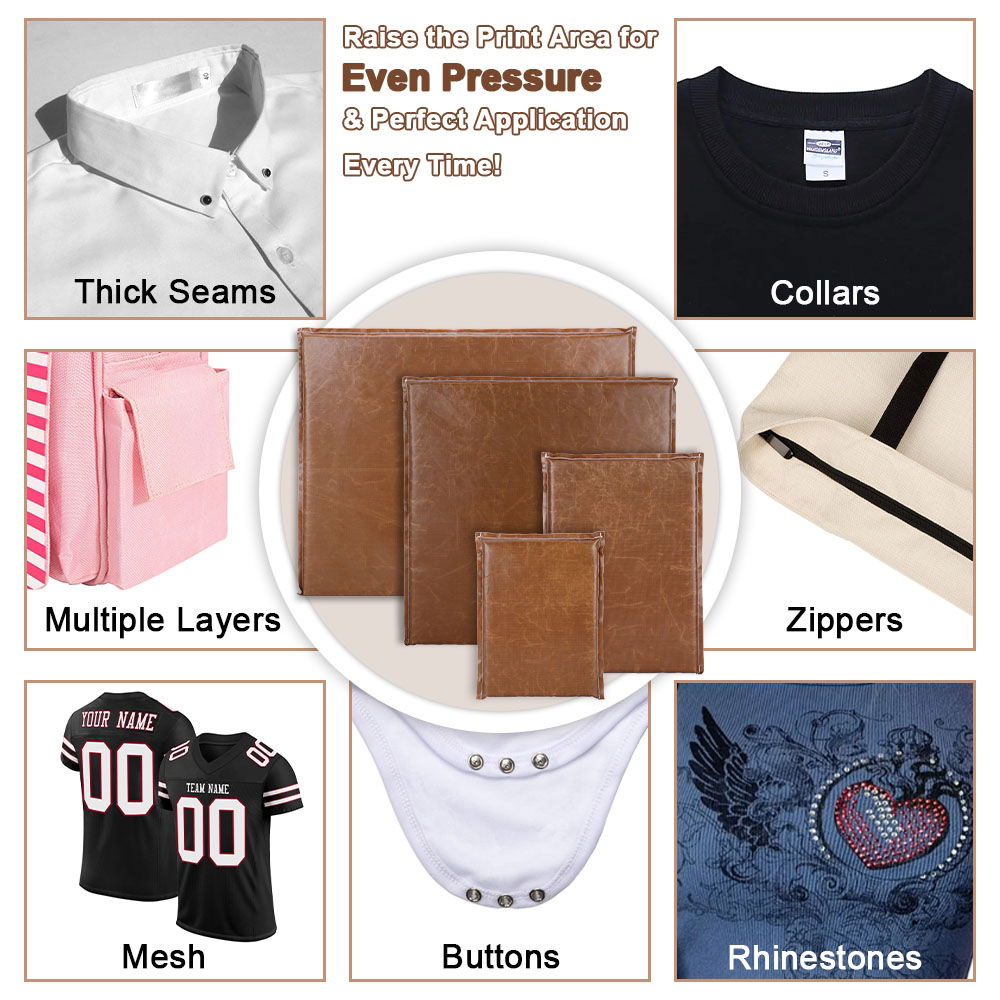
The garment decoration business relies on heat press pillows because various elements in garments or fashion accessories can create gaps between the heating platen and the printing surface. Here are some specific situations where heat press pillows are essential:
Seams and Buttons: Garments like hoodies, jackets, or shirts often have seams, buttons, or other raised elements. Without a heat press pillow, these features can create uneven pressure during heat transfer, resulting in areas where the design does not adhere properly. Placing a heat press pillow under these areas ensures that the pressure is distributed evenly, allowing for a smooth transfer of the design.
Layered Fabrics: Some garments consist of layered fabrics, such as jackets with lining or reversible vests. Without a heat press pillow, the varying thicknesses of these layers can prevent the heat and pressure from reaching the transfer material effectively. Using a heat press pillow between the layers helps compensate for the thickness differences, ensuring that the transfer adheres evenly to both layers without wrinkles or gaps.
Ribbed Fabrics: Fabrics with ribbed textures, such as pique knit or ribbed jerseys, can pose challenges during heat transfer. These textures can create uneven surfaces that affect the transfer process. Placing a heat press pillow under these fabrics helps to level out the surface, ensuring consistent pressure and a smooth transfer of the design.
Irregular Surfaces: Certain garments may have irregular surfaces, such as pleats or gathers, especially in skirts, dresses, or blouses. These irregularities can cause the fabric to bunch up or create uneven pressure during heat transfer. Using a heat press pillow helps to flatten out these areas, allowing for uniform heat and pressure application and ensuring a professional-looking transfer.
In addition to these scenarios, other garment elements make the use of Teflon pillows necessary for businesses, including collars, zippers, multiple layers, buttons, rhinestones, and more.
How to use heat press pillows?
When it comes to using heat press pillows, the steps are straightforward: simply place them beneath the printing layer. However, in practice, users may position them differently depending on the printing techniques employed. For instance, in DTF printing, users often place Teflon pillows under the garment because the risk of ink penetrating the fabric and leaving marks on the bottom layer is minimal. On the other hand, for sublimation printing, it is recommended to place heat press pillows between the layers. For additional tips or a step-by-step guide, you can refer to the following videos:
Conclusion
In conclusion, heat press pillows emerge as indispensable tools for any garment customization business. They not only ensure precise heat distribution and protect delicate fabrics but also facilitate seamless printing on challenging surfaces like seams and buttons. Whether you’re enhancing the quality of your designs or expanding your product offerings, integrating heat press pillows into your workflow can elevate your business’s capabilities and customer satisfaction. If you haven’t acquired them for your business yet, start considering them now. Your decision and investment will soon pay off, and you’ll thank yourself for making such a wise choice.