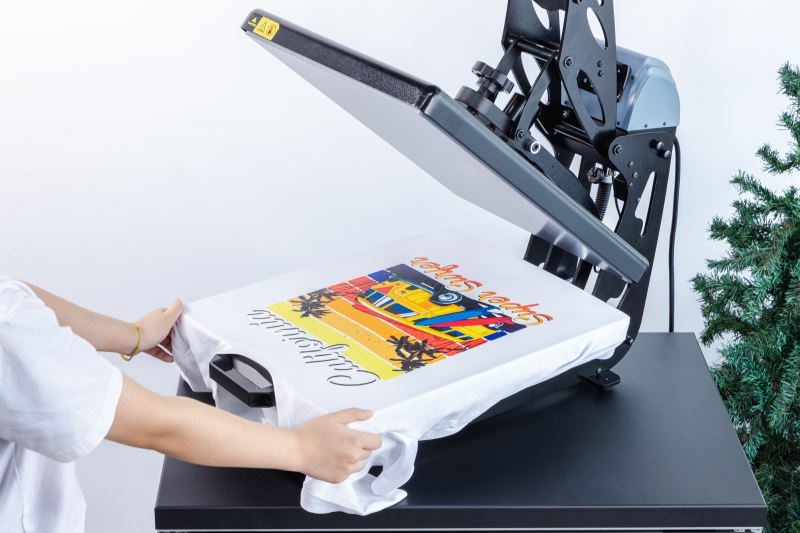
The custom T-shirt business represents a significant sector within the customization market. Sublimation printing, DTF printing, and HTV are among the most popular methods used for creating custom T-shirts. Regardless of the printing technique chosen, a heat press machine is essential for achieving success in this industry.
As technology continues to evolve, heat press machines are increasingly equipped with advanced features and functionalities. With new models continually entering the market, selecting the right machine for your custom T-shirt business has become more challenging, even for experienced users.
In this article, we will delve into the essential factors you should consider. We’ll provide a step-by-step guide and a comparison table to assist you in making a well-informed decision effortlessly. Our aim is to help you choose a heat press machine that perfectly aligns with the requirements of your custom T-shirt business.
Factors to Consider When Choosing Heat Press for Your T-shirt Business
Before we delve into the details and provide a comprehensive guide on choosing a heat press machine for your custom T-shirt business, it’s important to understand several factors that can greatly impact the performance of your heat press and, consequently, your printing business.
Size
Platen size may not be the most critical factor, but it should be the initial consideration for business owners when selecting and investing in equipment. Since businesses often operate within a budget, it’s crucial to ensure that the equipment can meet as many of the business’s demands as possible, including platen size. Therefore, owners must assess their current business needs and customer preferences to determine which sizes are essential, and whether additional platens for versatility are necessary.
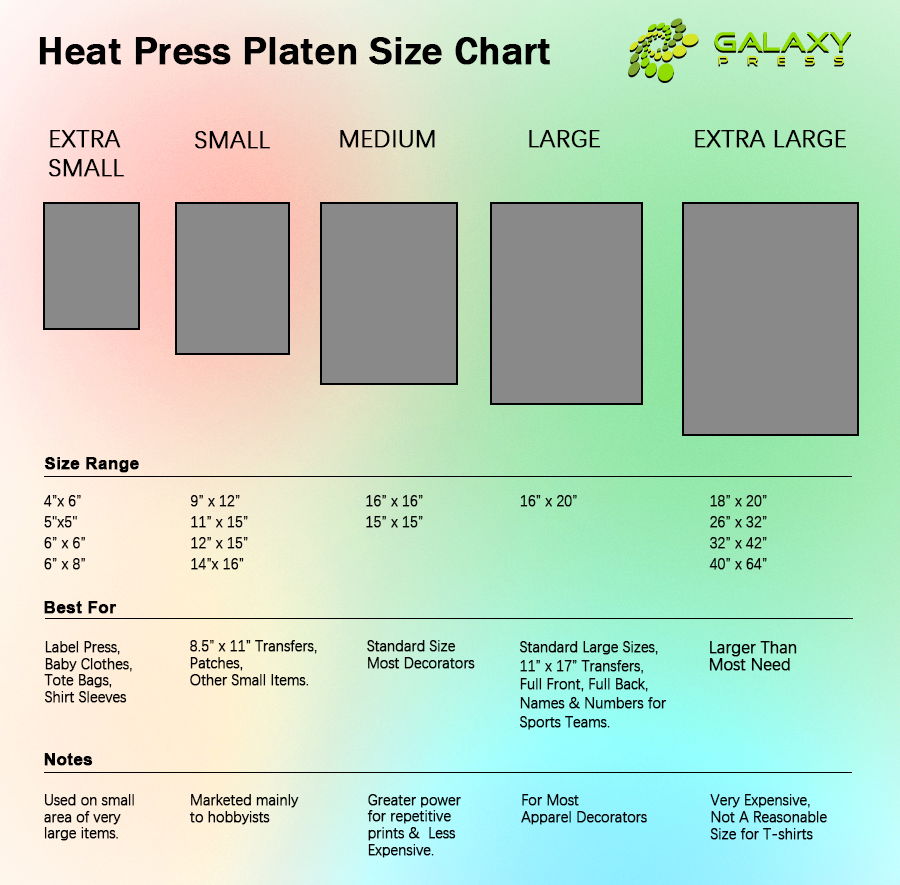
Commonly, the standard sizes for heat press platens are 16″ x 20″, 16″ x 16″, and 15″ x 15″, which are widely favored among users. For further guidance on choosing the right platen sizes for your business, you can refer to our previous post titled “Heat Press Sizes Guide for T-Shirt Printing Business.”
Type
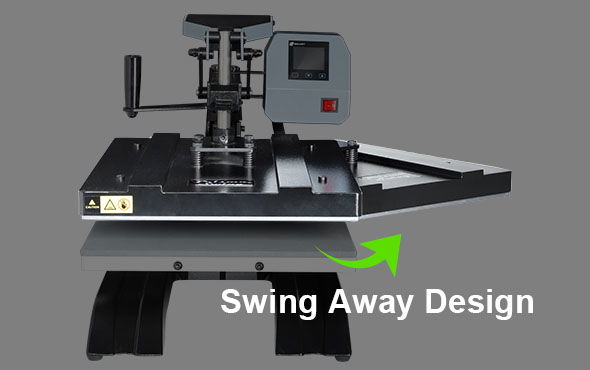
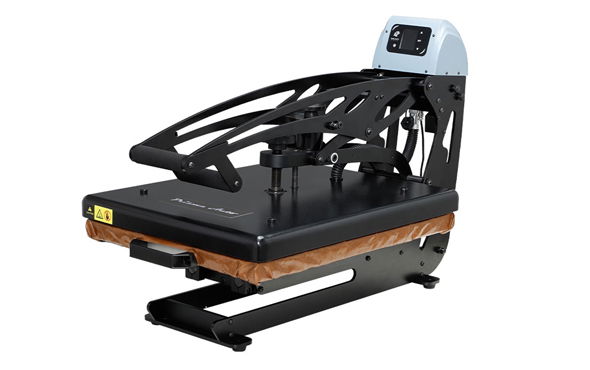
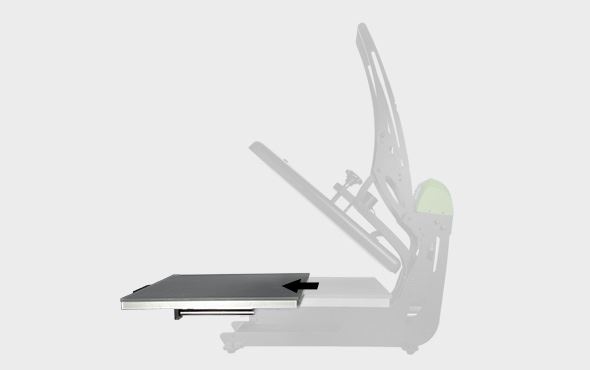
There are various types of heat press machines, each offering specific benefits that can cater to different business needs. Therefore, it’s essential to prioritize which features are most important for your particular business. Among the types available, a common debate revolves around choosing between swing-away and clamshell heat press machines. Swing-away heat presses require more floor space but offer easier garment placement and more even pressure distribution across the substrate surface. On the other hand, clamshell heat presses require less space and are ideal for locations where space is at a premium. A slide-out drawer heat press combines elements of both designs, providing a versatile option that falls between the swing-away and clamshell types. For a detailed comparison between clamshell and swing-away heat press machines, you can refer to our post titled “Difference Between Clamshell vs. Swing-Away Heat Press.”
Heat Distribution
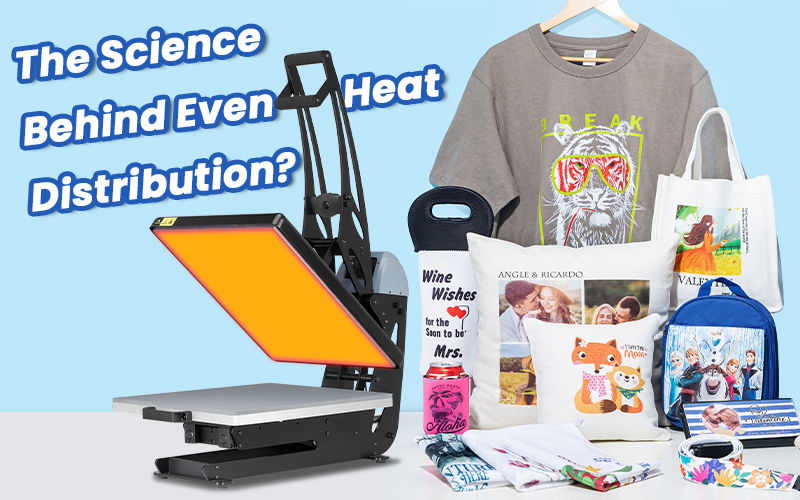
Heat distribution is a critical factor to carefully consider when choosing a heat press machine. It primarily depends on how effectively the heating elements are embedded within the upper heating platen and the overall quality of the platen housing. An effective way to gauge the uniformity of heat distribution is to utilize an infrared thermometer or similar devices to scan across the printing surface. Moreover, some suppliers provide detailed specifications that include temperature differentials, offering users valuable reference points during their selection process.
Pressure
Pressure distribution is another critical factor to consider for achieving optimal performance. This aspect is largely influenced by the design structure of a heat press, although some models offer additional features to improve even pressure distribution. An example of such a feature is the automatic floatation feature found in the Glaxy full heat press line. This feature enables the upper platen to automatically adjust angles to ensure full engagement with printed substrates.
Auto-open & Manual Open
Heat press machines also come with options such as auto-open functions, manual open designs, or a combination of both. Depending on your business model or personal preference, you can select the most suitable option. A manual open design typically requires the operator to be present throughout the entire process at the work site. In contrast, an auto-open function allows users to step away from the work site to attend to other business matters without risking damage to the substrates.
Interchangeable Platens
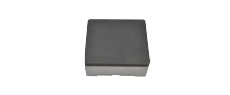
Another crucial feature for the custom T-shirt business is interchangeable platens. In garment decoration, there are often situations where a single garment requires printing in multiple locations that cannot be accommodated by a single platen. Interchangeable platens offer a convenient solution to this issue without the need to purchase additional machines. This flexibility allows businesses to efficiently meet various printing needs with ease.
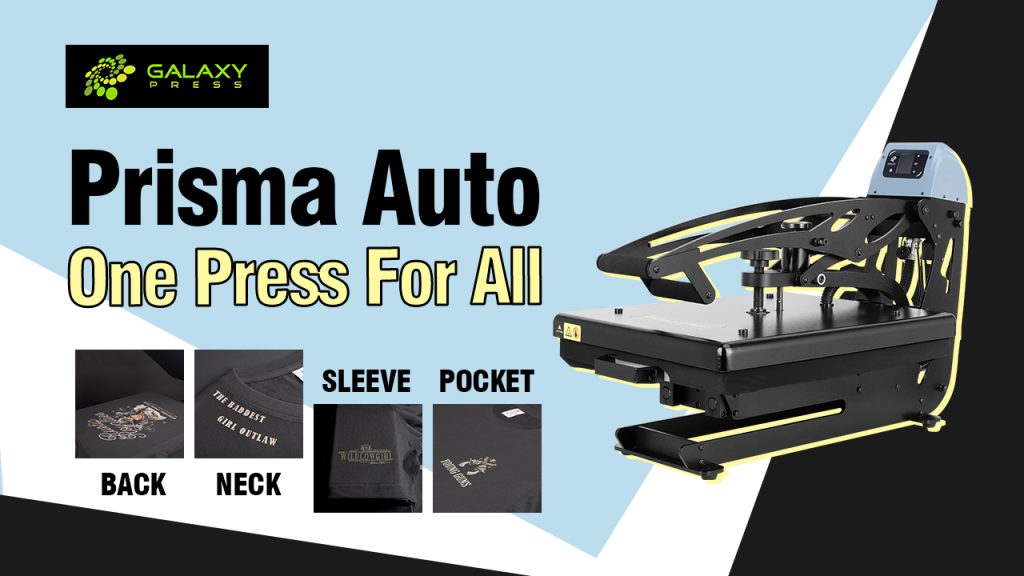
Among Glaxy heat press machines, the Prisma Auto (GS-105HS) stands out as one of the most versatile models, compatible with a wide range of interchangeable platens. Below is a table listing all the compatible platens that you can use with the Prisma Auto to meet your business needs.
| Platen | Size | Item No. | Applicable Heat Press | Applicable Blanks |
|---|---|---|---|---|
 | 4″*4″ | J.02.07.0006 | 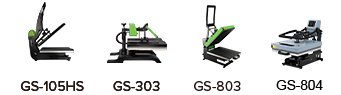 |  |
 | Dia 4″ | J.02.07.0005 | |  |
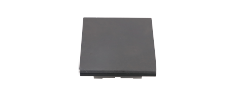 | 6″*6″ | J.02.07.0004 | | 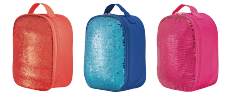 |
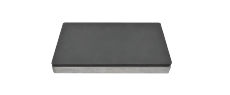 | 6″*10″ | J.02.07.0007 | |  |
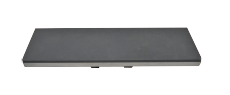 | 6″*20″ | J.02.07.0008 |  |  |
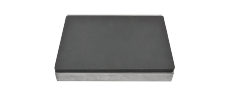 | 8″*10″ | J.02.07.0009 | | 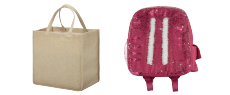 |
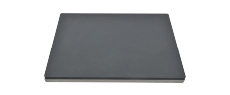 | 11″*15″ | J.02.07.0011 | | 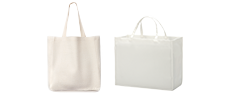 |
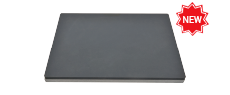 | 12″*16.5″ Perfect fit with A3 DTF printer | J.02.07.0066 | |  |
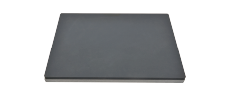 | 15″*15″ | J.02.07.0012 | |  |
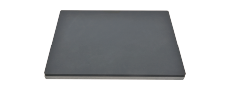 | 16″*20″ | J.02.07.0013 | |  |
Dressable & Threadable Platen
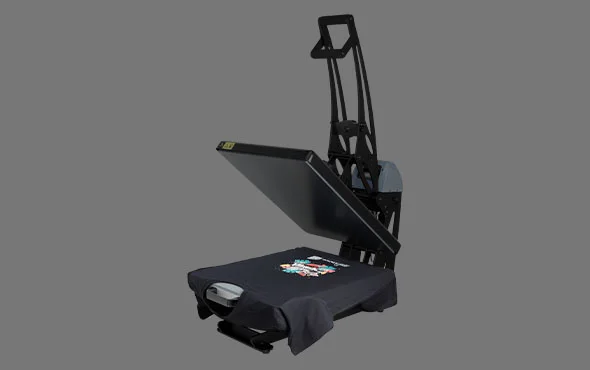
When printing both sides of a T-shirt you might need a dressable and threadable design for lower platen. The dressable feature allows users place t-shirt easily within seconds and the threadable design allows quick switch of printing side of a t-shirt. These features significantly increase productivity and efficiency.
With the aforementioned features, you can start and operate your business with ease. However, there are additional features that can further enhance your business. You can explore our previous article on the top 10 features for a T-shirt printing business for more information.
Step-by-Step Guide: How To Choose Heat Press Machine for your Custom T-shirt Business?
Now that you have a clear understanding of the features and functions beneficial to your custom T-shirt business, it’s time to conduct further research and make an informed decision. Below is a step-by-step guide on how to choose a heat press for your custom T-shirt business.
Step 1: Understand Your Needs
Before diving into the details, the first and most crucial task is to identify the requirements for your business, as they will significantly influence your final decision. Begin by listing all the important factors for your business, then rank these factors in order of importance. Assign each factor a rating from 1 to 10 based on its significance to your operations.
Step 2: Set Your Budget
Establish a budget for the heat press machine and use it as a filter to eliminate all product options that exceed your financial limits. This approach will help you narrow down your choices and create a shortlist of products that you can further evaluate.
Step 3: Conduct Brand Research
Now it’s time to conduct brand research based on the list you compiled from the last step. This research should include examining the product features and evaluating the service and support systems offered by each supplier. Begin by checking online reviews for the products or contacting their support and service teams to ask detailed questions and gather reliable information.
Step 4: Compare All Options
After completing the last three steps, you may find yourself with only a few options left on your list, making it challenging to decide which one to choose. A convenient and efficient way to make a final decision is to create a comparison table. Here’s how you can design and use the table to evaluate all your options:
| Product A | Product B | Product C | |
|---|---|---|---|
| Factor 1 (Importance Rate 9) | Score: 8 Points: 72 | Score: 8 Points: 72 | Score: 7 Points: 63 |
| Factor 2 (Importance Rate 8) | Score: 6 Points: 48 | Score: 9 Points: 72 | Score: 8 Points: 64 |
| Factor 3 (Importance Rate 7) | Score: 8 Points: 56 | Score: 7 Points: 49 | Score: 5 Points: 35 |
| Factor 4 (Importance Rate 6) | Score: 8 Points: 48 | Score: 9 Points: 54 | Score: 6 Points: 36 |
| Factor 5 (Importance Rate 5) | Score: 9 Points: 45 | Score: 8 Points: 40 | Score: 5 Points: 25 |
| Total Points | 269 | 287 | 223 |
In Step 1, you ranked all factors (Factor 1 to Factor 5) and assigned each a score from 1 to 10 based on its importance to your business. Next, evaluate each factor for every product and assign each product a score from 1 to 9 according to its performance on each factor. Then, multiply the importance score of each factor by the performance score of each product to calculate the points for that product.
For example, if Factor 3 has an importance score of 7 and Product B scores 7 on this factor, then Product B earns 49 points for Factor 3 (7 * 7 = 49 points). After totaling the points for each product across all factors, you can compare them. Product B clearly emerges as the best option for your business with the highest total points of 287.
Conclusion
In conclusion, selecting the right heat press machine for your custom T-shirt business hinges on understanding the critical factors that influence performance and efficiency. From heat distribution to platen size and operational features like auto-open or interchangeable platens, each consideration plays a pivotal role in achieving quality prints and maximizing productivity. By following the step-by-step guide provided, which emphasizes thorough research, budgeting, and comparative analysis, you can confidently navigate through the multitude of options available. Remember, your choice of heat press machine directly impacts the quality of your products and the operational efficiency of your business. Take the time to evaluate your specific needs and preferences against the features offered by various models. With these insights, you’ll be well-equipped to make an informed decision that propels your custom T-shirt business to success.