
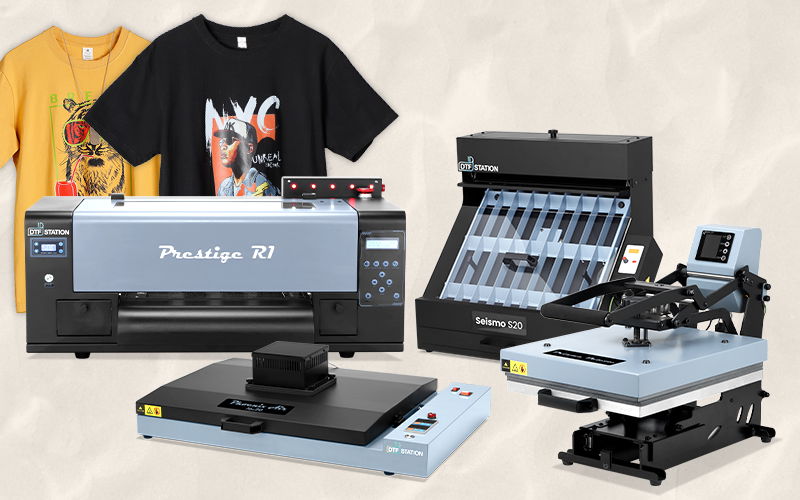
If you run a T-shirt printing business from home, one of the most crucial decisions you’ll face is choosing the best t-shirt printing machine for your operations. The market offers numerous printing solutions and product options, posing a formidable challenge for business owners, particularly beginners with limited knowledge on the subject. To guide entrepreneurs in making informed decisions, we’ll delve into the optimal printing solution for small-scale T-shirt printing businesses, top choices for small businesses, and recommended starter kits for aspiring business owners in this niche. Keep reading, and feel free to share your thoughts or insights with us by leaving a comment below.
What’s the best T-shirt printing solution for small business?
The debate over the best printing solution for custom T-shirt printing has been ongoing and heated. Conflicting ideas persist among various users. However, with the recent emergence of DTF (Direct-to-Film) printing technology, more and more T-shirt printing business owners are leaning towards the belief that DTF might provide the answer to this longstanding question.
We understand that opinions may still differ, and to facilitate a more informed decision-making process, we would like to share a comprehensive comparison among some of the most popular printing solutions in the market. This way, you can assess and decide which solution aligns best with the needs of your business.
| DTF | Sublimation | DTG | Vinyl | Screen | |
| Fabrics | 10 | 8 (polyester based fabrics only ) | 8 (cotton-based fabric only) | 8 (work better on polyester and cotton) | 10 |
| Prints Quality | 10 | 9 (inks into fabric, potential loss of design details) | 9 (inks into fabric, potential loss of design details) | 8 (one layer per color, best for simple color and design) | 9 (not as accurate as digital printing) |
| Texture | 9 (soft with slight plastic feel) | 10 (water-based ink with zero feel) | 10 (water-based ink with zero feel) | 8 (pronounced plastic feel) | 9 (using inks sitting on top of fabric) |
| Durability | 10 (excellent stretchability and resistance to cracking) | 9 | 9 (withstand multiple washes without losing their color or quality) | 7 (start to peel after a few washes) | 9 (plastisol inks are more durable than water-based inks) |
| Cost-Effective | Small and medium orders | Small and medium orders | small to medium orders | small orders | large orders |
| Unit Costs (for orders) | 10 | 10 | 9 (pretreatment and post-treatment is required) | 7 (weeding is required for each product, with high labor costs) | 9 |
| Easy To Use | 9 | 10 | 9 (pretreatment and post treatment is required) | 7 (weeding is extremely difficult for complex design) | 7 (high setup costs and complex process) |
| Overall | 9.6 | 9.3 | 9 | 7.5 | 8.8 |
DTF Printing
Direct-to-Film (DTF) printing has emerged as a revolutionary technology in the realm of custom printing, particularly for fabrics like T-shirts. Unlike traditional methods, DTF involves directly transferring ink from a film onto the fabric, offering a unique set of advantages and use cases.
Here are scenarios and situations where DTF Printing works best:
- Detailed and Complex Designs: DTF is ideal for intricate designs with fine details and gradients, providing a level of precision that other methods may struggle to achieve.
- Small Batch and One-Off Orders: Perfect for small-scale operations or businesses receiving one-off or limited orders, DTF allows for cost-effective and efficient printing without compromising on quality.
- Photorealistic Prints: DTF excels in reproducing photorealistic images on fabric, making it a preferred choice for businesses focusing on high-quality, visually striking prints.
- Versatile Fabric Compatibility: DTF printing is compatible with various fabric types, including cotton, polyester, and blends, offering versatility for a wide range of T-shirt materials.
- Quick Turnaround Time: With minimal setup and processing time, DTF printing enables a swift turnaround, making it suitable for businesses that prioritize efficiency and meeting tight deadlines.
Dye-sublimation Printing
Dye-sublimation printing, another popular method in custom apparel, infuses fabrics with vibrant designs using heat to transform dye into gas, resulting in vivid and durable prints. While this process boasts several advantages, including intense color saturation, a soft finish, and the ability to reproduce photorealistic images, it comes with considerations. These include limitations on fabric compatibility, a relatively higher initial investment, environmental concerns, and challenges with dark or light-colored fabrics. Understanding both the strengths and drawbacks of dye-sublimation is essential for businesses seeking a balance between vibrant aesthetics and practical considerations.
Here are scenarios where dye-sublimation printing excels:
- Sportswear and Activewear: Dye-sublimation is highly suitable for sportswear and activewear, where vibrant and breathable prints are essential.
- All-Over Designs: When the design requires covering the entire garment seamlessly, dye-sublimation is the preferred choice for achieving an all-over print.
- Custom Apparel with Photorealistic Graphics: Dye-sublimation is perfect for creating custom apparel featuring photorealistic images, intricate patterns, or detailed graphics.
- Promotional Products: It excels in producing promotional products like branded T-shirts, bags, and accessories, ensuring consistent and high-quality branding.
DTG (Direct-To-Garment) Printing
Direct-to-Garment (DTG) printing stands as a cutting-edge solution in the world of custom apparel, offering great precision and versatility. This process involves directly applying water-based inks onto the fabric, resulting in high-quality, detailed prints. The advantages of DTG printing include the ability to reproduce intricate designs with vibrant colors, a soft feel on the fabric, and the absence of setup costs for multiple colors. However, there are considerations to bear in mind, such as potential limitations on fabric types, the necessity for pre-treatment on some materials, and the need for regular maintenance to ensure optimal performance.
Here are scenarioswhere DTG printing excels:
- Complex and Detailed Designs: DTG excels in intricate designs with numerous color variations, offering precision. However, when compared with DTF, it prints directly onto fabric, which may result in potential detail loss.
- Small Batch or One-Off Orders: Efficient for small orders, DTG eliminates setup costs tied to multiple colors. Yet, expenses rise due to the costs of pretreatment liquid and associated labor.
- Soft and Comfortable Finish: Garments produced through DTG printing have a soft feel on the fabric, ensuring comfort for the wearer and adding a premium touch to the final product.
Heat Transfer Vinyl
Heat Transfer Vinyl (HTV) printing stands as a versatile method for customizing fabrics, allowing for the creation of unique designs on various garments. This process involves cutting designs from vinyl sheets and applying them to the fabric with heat. The advantages of HTV include its suitability for small-scale operations, cost-effectiveness for single-color designs, and the ability to achieve a textured or layered look. However, it is essential to consider the limitations, such as the complexity of intricate designs, potential for peeling over time, and the necessity for compatible fabrics for successful application.
Here are scenarios where HTV excels:
- Simple and Bold Designs: HTV is ideal for simple and bold designs, making it an excellent choice for creating personalized apparel with individual names and numbers.
- DIY Projects: HTV is popular among hobbyists and individuals engaging in DIY projects, providing an accessible and creative avenue for customizing clothing and accessories.
- Textured and Layered Effects: HTV allows for textured and layered effects, adding depth and dimension to designs, making it suitable for unique and eye-catching applications.
Screen Printing
Screen printing, an age-old technique, remains a stalwart in the realm of custom apparel. This method involves pressing ink through a fine mesh screen onto the fabric, resulting in durable and vibrant prints. The pros of screen printing include its longevity, ability to produce high-quality prints for large quantities, and cost-effectiveness for bulk orders. However, challenges include setup costs, especially for multiple colors, and limitations in intricate detailing due to the thickness of the ink layers.
Here are scenarios where screen printing excels:
- Bulk Production: Screen printing excels when large quantities of the same design need to be produced, making it a preferred choice for businesses handling bulk orders.
- Bold and Solid Colors: Screen printing excels in producing bold and solid colors, offering a vibrant and eye-catching aesthetic that stands out on garments.
- Long-Lasting Prints: Ideal for designs that require longevity, screen printing’s thick ink layers result in prints that withstand wear and washing over time.
How T-shirt Printing Machine Works In DTF?
Given that DTF printing is recognized as the optimal solution for T-shirt printing, our focus will be specifically on elucidating the workings of DTF in this context. The typical process of DTF printing encompasses several steps: design creation, DTF transfer printing, application of powder, curing the powder, and the final heat transfer accomplished using a heat press machine.
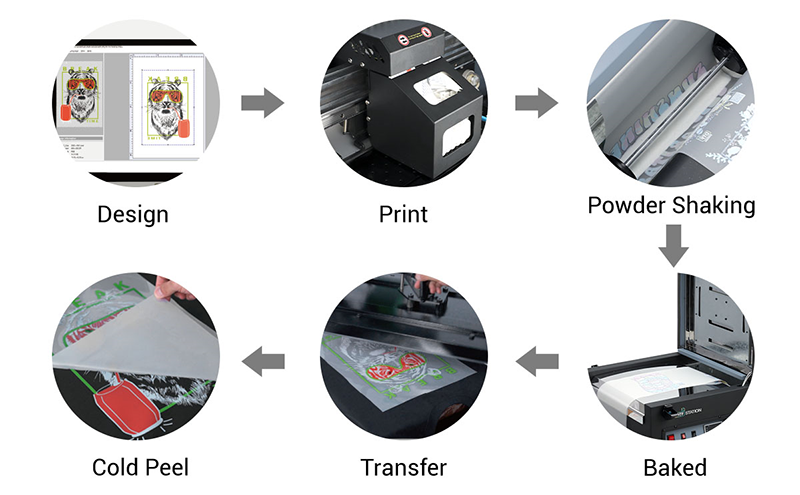
Throughout this process, various machines play distinct roles, each performing specific functions. Here’s an overview of how each machine operates:
DTF Printer: It is a specialized or modified printing device crafted to utilize DTF ink. Its primary function is to print the desired design onto DTF films, which serve as carriers or transfers for the design throughout the printing process.

Powder Shaker: After the DTF printer produces the transfer, it is sent to the powder shaker. Here, adhesive powder is evenly distributed over the film to cover the entire design area. This process assists in establishing a robust bond between the ink and the fabric during the subsequent heat press.

Curing Oven: Following powder distribution, the transfer proceeds into the curing oven for the activation and setting of the adhesive, commonly referred to as the curing process. This critical step improves the quality and durability of the final print, ensuring a robust and long-lasting bond between the ink and the fabric.

Heat Press: To transfer the design from the DTF film onto the garment, users must utilize a heat press machine. This process involves applying the right amount of heat and pressure (check our ultimate guide on heat press settings), allowing the adhesive powder to effectively bond the design and fabric. This crucial step ensures durable prints that withstand the test of time.
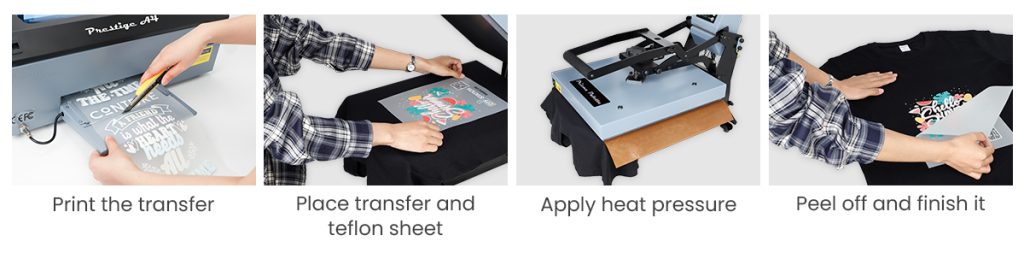
You can gain a better understanding of how DTF works for T-shirt printing business by watching this video.
Which T-shirt printing machine is best?
Finding the best T-shirt printing machine for your business is not a straightforward task; it necessitates considering your personal preferences and business requirements. Since these machines are intended for commercial use and come with a significant cost, it’s crucial to approach the decision with thorough consideration. Before exploring the myriad product options available in the market, it’s equally important to discern what holds greater significance for your business. Creating a checklist of priorities can assist you in determining which printing machine aligns better with your specific needs. In addition to this checklist, here are some other factors that you can take into account to inform your decision.
Printing Width: When choosing the ideal T-shirt printing machine for your business, it’s crucial to pay attention to the printing width limits. Typically, a maximum width of 40mm is sufficient for printing the majority of T-shirts. For those just starting out, it’s advisable to begin with either A4 or A3 size machines. Opting for A4 or A3 size provides users with the capability to manage a wide range of T-shirt printing projects effectively. For additional details, refer to the design size and placement guide post.

Daily Output: Productivity holds crucial significance in determining business profits. While it’s a standard practice to inquire about the printing speed of a machine from the supplier, many users tend to overlook the possibility that the declared value of printing speed may differ from the actual value in real-world applications. Therefore, it is advisable to not solely rely on the stated printing speed. Instead, it is recommended to specifically ask about the daily output based on a certain print size, as this provides a more accurate measure of the device’s practical efficiency.
Ease of Use: Ease of Use is a critical consideration for entrepreneurs and business newcomers when selecting a printing machine, as it can significantly alleviate potential challenges. Opting for a machine with user-friendly features can save considerable time and effort. Of course, for those who enjoy exploring advanced features, there are options with enhanced functionalities available. However, for individuals less confident in navigating intricate settings, selecting a device with a minimal learning curve is advisable. This ensures that you can commence printing promptly, requiring only a quick review of the user manual or tutorial videos to get started.
Support and Training: Avoiding the loss of orders and clients due to malfunctioning devices is crucial. Opt for a DTF printer with straightforward maintenance and cleaning processes to save time and effort. Adequate support and training from the supplier can play a pivotal role in preserving your brand reputation, providing the knowledge and assistance needed to address issues promptly and efficiently.
Durability and Build Quality: Invest in a DTF printer with a robust build to ensure durability and longevity, especially if you plan to use it for heavy production.
Budget Considerations: Setting a budget is the first step; then, compare the features and capabilities of various DTF printers within your price range. Take an extra step to factor in costs for onsite training, additional tech support, or any required paid software. It’s crucial to consider the long-term cost of ownership to make a comprehensive and informed investment decision.
Scalability & Upgradability: Scalability and upgradability are often overlooked yet critical factors in choosing a DTF printing solution. While finding the best value for the present is crucial, it’s equally vital to consider your business’s future growth. As your business expands, you may need to upgrade for increased productivity. Choosing a printing solution that can evolve with your business ensures it aligns with the dynamic nature of the customization industry. For instance, our DTF printing product line caters to T-shirt business owners with varying needs in printing width and daily output, providing a scalable and upgradable solution for different levels of demand.
| Model | Prestige R1 | Prestige R2 Pro | Prestige L2 | Prestige XL2 | Prestige XL2 Pro | Prestige XL3 | Prestige XL4 |
|---|---|---|---|---|---|---|---|
| Photo |  |  | 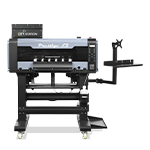 | 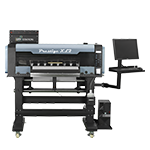 |  |  |  |
| Max. Printing Width | 33cm (13″) | 33cm (13″) | 45 cm (17.7″) | 60cm ( 23.62″) | 60cm ( 23.62″) | 60cm ( 23.62″) | 60cm ( 23.62″) |
| Printing Speed | 8Pass 720x1080dpi 0.97m²/h (10.44 ft²/h); 10Pass 720x1440dpi 0.73m²/h(7.86ft²/h); | 8Pass 700*1200DPI 4.04m2/h (43.49ft²/h); 12Pass 720*1800DPI 2.06m2/h (22.17ft²/h) | 6Pass, 720*1800dpi, 6.5m²/h (70.0ft²/h); 8Pass, 720*2400dpi, 5.0m²/h (53.8ft²/h) | 6Pass, 720*1800dpi, 7.7m²/h (82.9ft²/h); 8Pass, 720*2400dpi, 6.0m²/h (64.2ft²/h) | 8Pass, 720 x1200dpi, 4.8m²/h (51.67ft²/h); 12Pass, 720 x 1800dpi, 4.2m²/h (45.2ft²/h) | 6Pass 720*1800dpi 6.6m²/h (71.0ft²/h); 8Pass 720*2400dpi 6.3m²/h (67.5ft²/h) | 6Pass, 720*1800dpi, 13.9m²/h (149.1ft²/h); 8Pass 720*2400dpi 12.0m²/h (128.6ft²/h) |
| Net Weight (kg) | 39.5 kg (87.1 lb) | 59 kg (130.1 lb) | 132 kg (291.0 lb) | 135 kg (297.6 lb) | 135 kg (297.6 lb) | 202 kg (445.0 lb) | 202 kg (445.0 lb) |
| Main Board & Printer Head | DTF STATION PILOT/ Single EPSON F1080 | DTF STATION PILOT/ Dual EPSON i1600 | DTF STATION PILOT/ Dual Epson I3200 | DTF STATION PILOT/ Dual Epson I3200 | DTF STATION PILOT/ Epson i3200HD*1 + i1600*1 | DTF STATION PILOT/ Epson i3200x3 | DTF STATION PILOT/ Epson i3200x4 |
| Daily Output Based on 28cmx34cm gang sheet, 8 working hours | 81pcs (720x1080dpi); 61pcs (720x1440dpi ) | 367pcs (720x1200dpi) ; 236pcs (720x1800dpi) | 463pcs (720*1800dpi); 409pcs (720*2400dpi) | 621pcs (720*1800dpi); 536pcs (720*2400dpi) | 545pcs (720 x1200dpi) ; 376pcs (720 x 1800dpi). | 571pcs (720x1800dpi); 536pcs (720*2400dpi ) | 1104pcs (720*1800dpi); 953pcs (720*2400dpi) |
| Size | Printer Size 85.0cm×63.8cm×44.0cm (33.5″L×25.1″D×17.3″H) Packing Size 94.5cm×60.5cm×45.5cm (37.2″l×23.8″D×17.9″H) | Printer Size 85.0cm×63.8cm×44.0cm (33.5″W × 25.1″D × 17.3″H) Packing Size 95.3cm×64.6cm×53.0cm (37.5″W × 25.5″D × 20.9″H) | Printer Size 116.0cm×75.0cm×141.6 cm (45.7″W × 29.5″D × 55.8″H) Packing Size 120cm×100cm×71.1cm (47.2″W × 39.4″D× 28.0″H) | Printer Size 166.0cm × 85.0cm×141.6cm (65.3″W × 33.5″D × 55.8″H) Packing Size 146.6cm×100cm×71.1cm (57.7″W × 39.4″D × 28.0″H) | Printer Size 165.95cm× 94.5cm×146.8cm (65.3″W × 37.2″D × 57.8″H) Packing Size 146.4cm×100.0cm × 71.1cm(57.7″W × 39.4″D × 28.0″H) | Printer Size 214.55cm× 107.0cm×165.3cm (84.5″W × 42.1″D × 65.1″H) Packing Size 210cm×110cm×74.2cm (82.7″W × 43.3″D × 29.2″H) | Printer Size 214.6cm×107.0cm×165.3cm (84.5″W × 42.1″D × 65.1″H) Packing Size 210cm×110cm×74.2 cm (82.7″W × 43.3″D × 29.2″H) |
In addition to the DTF printer for T-shirt printing, another essential machine is the heat press. Within our product line, various options are available, each offering distinct features and falling within different price ranges.
| Model | GS-303 | GS-105HS | GS-804 | GS-805 |
|---|---|---|---|---|
Image | 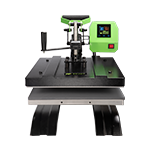 | 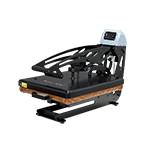 |  |  |
Price Range |  | |  | |
| Recommended Use | Premium Production Use | Premium Production Use | Advanced Hobby & Home Use | Hobby & Home Use |
| Durability |  |  | | |
| User Friendly | | | | |
| Available Sizes | 16″x20″ | 16″x20″, 15″X15″ | 13.8″16.5″ | 9″x12″ |
| Auto-open/Manual | Manual | Optional | Optional | Manual |
| Format | Swing Away | Clamshell; Manual&Auto-Open Interchangeable; Slider-Out | Clamshell | Clamshell |
| Ramlock System | YES | YES | YES | NO |
| Pressure Read Out | NO | YES | NO | NO |
| Nonstick Coating | Sprayed On | Sprayed On | Sprayed On | Sprayed On |
| Temperature& Time Gauge | Digital Automatic Start | Digital Automatic Start | Digital Automatic Start | Digital Automatic Start |
| Weight(kg) | 16″x20″ 42KG | 15″x15″-49KG; 16″x20″-54KG | 30KG | 15KG |
| Suitable for | Dye-sub Laser Transfer Vinyl Transfer Screen Printed Transfer | Dye-sub Laser Transfer Vinyl Transfer Screen Printed Transfer | Dye-sub Vinyl Transfer Screen Printed Transfer | Dye-sub Vinyl Transfer Screen Printed Transfer |
| Warranty | 10 years on heat platen 1 year on parts | 10 years on heat platen 1 year on parts | 5 years on heat platen 1 year on parts | 3 years on heat platen 1 year on parts |
How much are T-shirt printing machine?
In comparison to DTG printers and screen printers, DTF printers offer a more affordable solution. Standard DTG printers can range from $13,000 to $25,000 or more, while DTF printers are generally more competitively priced, ranging from $3,000 to $9,000 for a similar level of output. For small T-shirt printing businesses, a $3,000 DTF printer can yield excellent results, satisfying most printing orders and enabling quick cost recovery. As your business and demands expand, you can consider upgrading your setup for additional features in the future.
Apart from DTF printers, here are some associated costs for other setup and devices:
- Heat Press: $300-$5000 (for hobbyist, $300-$500 would be good enough.)
- Powder Shaker (optional): $1000 to $10000
- Curing Oven (optional): $600 to $1500
- Air Purifier (optional): $300 to $ $1200
The best T-shirt printing machine starter kit
For those venturing into the T-shirt printing business, it’s crucial that the starter kit solution is user-friendly, caters to small batch orders, and possesses a compact size suitable for convenient placement within your workshop or department—all while staying within your budget limit. To guide you towards success, we introduce the ultimate T-shirt printing machine starter kit—a comprehensive solution crafted to address the requirements of both novices and experienced entrepreneurs alike.

All the devices in the starter kit is specially designed for small business runners with limited space, budget and target for small-run orders. Following are some information about these devices:
Prestige A4 DTF Printer: Prestige A4 is DTF Station’s smallest printer ever! Perfect for garment printing enthusiasts starting out with direct to film printing,the desktop printer is avaiable in three color options -Classic (Black& Grey ),pink and mint. It ensures high quality and reliable results at 0.8㎡/hour, and its compact design means you can place this printer just about anywhere. It’s offered with Cadlink Software, white ink circulating system and auto-cleaning system. It’s perfect for entry level DTF Printing, compact yet powerful with intuitive,elegant design for easy set up.

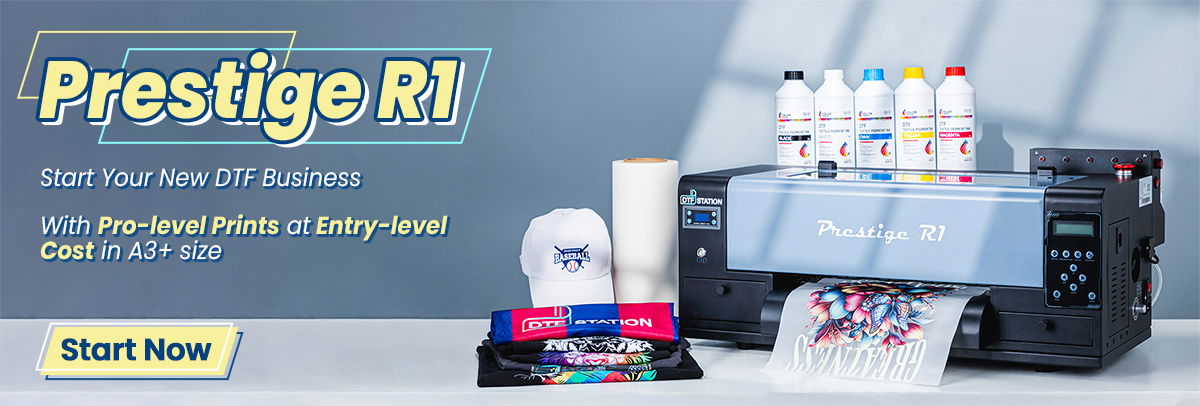
Prestige R1 A3 DTF Printer: Among our DTF printer lineup, the Prestige A4 stands out as the best converted model for beginners, offering a great introduction to DTF printing. However, for business startups seeking a more reliable printer that delivers professional-quality prints at an affordable price, the Prestige R1 is the ideal option. The Prestige R1 is the first A3+ DTF printer originally manufactured (not converted) for those looking to explore DTF printing. With a maximum print width of 33cm (13”) and a print speed of 0.9 m²/hour at 8 passes (720x1440dpi), it allows you to efficiently produce 4-5 shirts per hour. It’s perfect for those just starting out in DTF printing, small to medium-sized businesses, home setups, and smaller workspaces. It is a great choice for those who want to save on cost without compromising quality or speed.
Seismo S20 Desktop Powder Shaker: Seismo 20 is developed to tidy user’s working space by shaking the powder manually, it is popular among the users who use their DTG printer to print DTF transfer in sheet
Together with DTF Station’s Phoenix Air 4050 oven ,Seismo 20 would bring your DTF process to next level. It’s a desk-top but efficient solution for small business, easy to operate and maintenance, friendly for beginners.

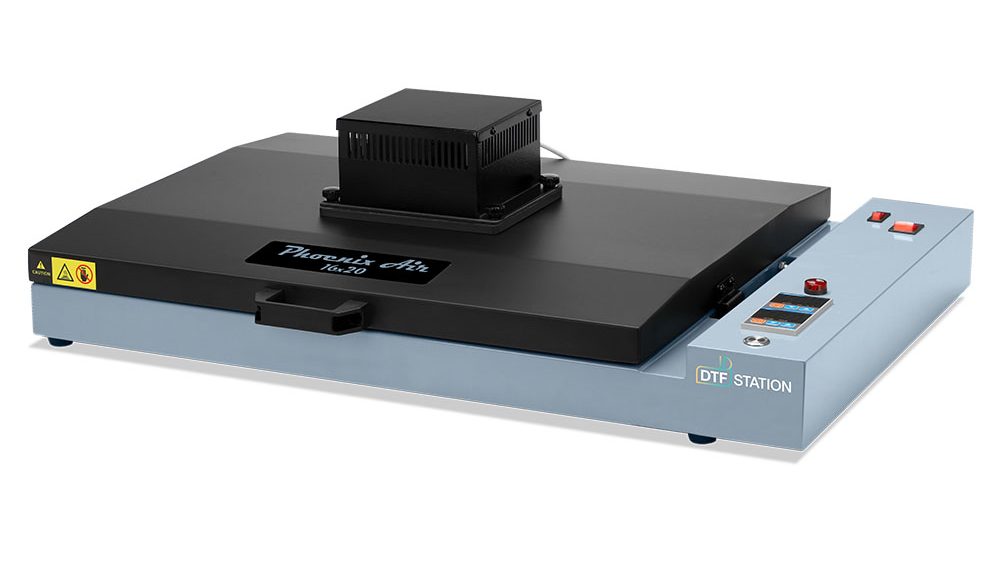
Phoenix Air 4050 Curing Oven: Phoenix Air 4050 oven was developed by the experience we had with Phoenix oven, to make an oven which would be less power consumption, even heating and more stable for curing are the key when we were developing. Finally, the lower heating system with gas spring lifting help us achieve the goal and it make our Phoenix Air 4050 oven be very popular among all the DTF sheeting printing users by the over the level value it brings to users! It’s with build-in air purifier and easy to operate and maintenance, friendly for beginners.
GS-804 A3 Heat Press: GS-804 is with the size of 3542cm(13.7816.54″) which is the perfect size for the users who has both A3 and A4 printing solutions. It’s with elegant design ,LED disaplay with RamLock system make this press easy to operate. Three colors for your choice, Classic Black& Grey, Pink and Mint. It’s easy to operate and maintenance and an ecomonic option for small business owners.

Scaling Up: Advancing Beyond the Starter Kit
As your T-shirt printing business flourishes, the prospect of upgrading from a starter kit to a more advanced setup becomes enticing. Here are two recommended paths for enhancement ensures your business stays at the forefront of innovation and efficiency based on the starter kit.
Path 1: Eliminate Manual Intervals
The first upgrade option for users advancing from the starter kit is the introduction of Seismo Miro 13, designed to replace the Seismo S20 desktop powder shaker and Phoenix Air 4050 curing oven. Seismo Miro 13 consolidates powder applying and curing functions into one compact machine. This integration not only eliminates manual intervals but also automates the entire printing process when properly configured. Experience enhanced efficiency and a seamless workflow with this innovative upgrade.
Miro 13 is the latest version of auto-shaker based on Seisimo 11, it is developed to update the user’s benefit to run both DTF Station’s A3 and A4 solutions. With lower heating solution ,it reduced the power consumption from 1500W to 1100W while make the whole curving process much more easier. Its build-in air purifier make our Miro 13 ensure you a more easier set-up while more eco-friendly working enviroment.
Path 2: Maximizing Output: Transitioning to A3 DTF Solution
Upgrade your T-shirt printing capabilities by transitioning from an A4 to A3 DTF printing solution. This upgraded solution comprises the Prestige R2 A3 DTF printer, Seismo Miro 13 powder shaker, and GS-804 A3 heat press machine. This shift not only eliminates extra labor costs and automates the printing process but also significantly boosts daily output, soaring from 70 prints to an impressive 150-200 prints.

Where to buy t-shirt printing machine?
Online platforms such as Amazon, eBay, or AliExpress may offer convenience, but a local dealer provides a more personalized buying experience. This allows you to inspect the machine, receive expert guidance, and access reliable post-purchase support. For business owners, these extra benefits are crucial to ensuring a secure and successful start to your T-shirt printing venture. If you are looking for a realibale solution now, you might talk to our dealers or leave us a comment to learn more information.
Conclusion
In the quest to establish your small business in T-shirt printing, the journey involves not only identifying the best T-shirt printing machine but also understanding the dynamics of the market. From exploring the workings of DTF technology to considering the costs involved, you’ve gained insights that set you on the path to success. Now, it’s the time empower your venture by selecting the ideal t-shirt printing machine to suit your specific needs. Feel free to leave a comment below, sharing your thoughts or questions!




Comments(05)
Insightful information. Thank you.
0211715410 I am very interested to buy this machine.
Hi Jo, thanks for your interest! Someone from our team will be in touch with you shortly to answer any questions you might have. Let us know if there’s anything you’d like to know in the meantime!
Guia nota 10! Traçar o caminho da A4 para a A3 com automação (shaker) é o que separa amadores de profissionais. Também seguimos esse padrão de excelência
Printing machine