

Are your customers complaining about inconsistent prints, fading colors, or uneven transfers? The problem might not be their technique—it could be their heat press machine’s inability to distribute heat evenly. As a dealer or distributor, unreliable equipment doesn’t just hurt your clients—it hurts your reputation. Returns, refunds, and lost trust are costly, and in a competitive market, the quality of the machines you supply makes all the difference.
So, what separates a high-performance heat press from a subpar one? The answer lies in engineering, materials, and rigorous testing. In this post, we’ll break down the science behind even heat distribution—from heating element design to plate calibration—so you know exactly what to look for when sourcing machines. By the end, you’ll have the knowledge to choose truly reliable equipment—the kind that keeps your customers happy and your business growing. Let’s dive in.
A. Heating Tube Design: The Key to Uniform Heat Distribution
In heat press machines, uniform heat distribution is critical, and the design of the heating tubes plays a decisive role. Most entry-level machines use single heating tubes to reduce costs. However, as heat travels outward from the source, temperature variations increase, leading to uneven performance. For superior results, mid-range to high-end machines employ dual heating tubes. This advanced design minimizes temperature fluctuations, ensuring consistent heat across the entire platen—delivering reliable, professional-grade transfers every time.


B. Material Matters: The Direct Link Between Platen Quality and Heat Consistency
The foundation of consistent heat distribution lies in one critical component: the heating platen. High-performance heat presses use industrial-grade aluminum platens—machined to exacting standards for optimal thermal conductivity and flatness. Unlike inferior cast or low-grade alternatives, precision-engineered aluminum ensures heat spreads faster and evenly across the entire surface, eliminating cold spots that cause failed transfers. Over time, subpar platens warp or develop inconsistencies, forcing dealers to deal with customer complaints and returns. That’s why leading manufacturers prioritize high-grade aluminum —durable enough to withstand constant heating cycles without distortion.
When evaluating machines, pay close attention to the platen’s material quality. A quick and effective way to distinguish quality is by comparing weights – high-grade aluminum platens are noticeably heavier than their inferior counterparts, as cheaper alternatives often use thinner or lower-density materials to cut costs.
C. Platen Construction: The Foundation of Precise Heat Distribution
Even the most advanced heating system cannot compensate for poor platen design. The structure of a heating platen significantly impacts heat distribution performance. Currently, three main designs dominate the market:
- Surface-mounted Heating Tubes: Heating elements secured directly into platen grooves, resulting in slower heat-up times and significant temperature variations (±5-10°C typical)
- Enclosed Housing Design: Heating tubes housed in separate channels on the platen and thermal transfer occurs through both metal contact and air convection.
- Die-cast Integrated Design (Galaxy Press’ method) – Heating tubes and platen cast as a single aluminum unit, eliminating air gaps for pure conductive heat transfer


The enclosed housing (Option 2) works well for commercial applications, while the die-cast integration (Option 3) meets both commercial and industrial demands. This superior design leverages aluminum’s exceptional thermal conductivity – unlike air gaps in other designs, solid aluminum ensures rapid, uniform heat spread during both heating and cooling cycles, maintaining temperature consistency across the entire platen surface.
D. Thicker Platens for Better Performance: The Thermal Mass Advantage
The die-cast structure provides superior heat distribution by effectively containing thermal energy within a unified aluminum unit. However, maintaining stable temperatures – preventing both rapid heating spikes and cooling drops – is equally critical to ensure successful transfers. One proven solution implemented by Galaxy Press is increasing platen thickness to 19mm after testing different thickness for optimized results. The substantial aluminum mass acts as a thermal buffer, significantly reducing temperature fluctuations compared to standard thin platens. This design prevents the sudden heat loss that can cause transfer failures, while the die-cast construction’s inherent efficiency maintains consistent performance throughout production cycles.
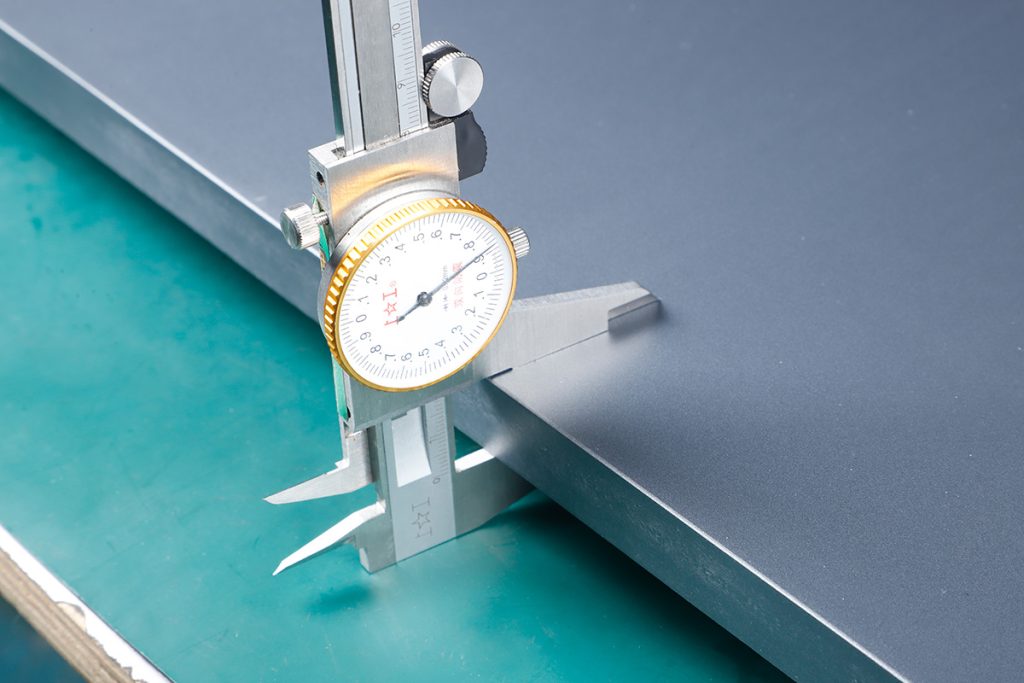
E. Rigorous Testing: The Final Assurance for ±5℃ Temperature Consistency

The final critical factor in ensuring consistent temperatures is rigorous testing. Galaxy Press employs multi-point temperature tester (which we have also been using for testing our powder shaker machines) to verify heat distribution across the entire platen surface, guaranteeing temperature difference remain within a tight ±5℃ tolerance range.
Conclusion
Achieving even heat distribution in a heat press machine isn’t luck—it’s science. From optimized heating tube design and high-grade platen material to precision platen structure, strategic platen thickness, and rigorous testing, each factor plays a critical role in performance. When these elements work in harmony, you get consistent, professional-grade transfers—every time.
Found this breakdown helpful? Share it with fellow printers or on LinkedIn to help others choose the right equipment!









Comments(02)
Please send us distributor price list
technical info
CE aprooved?
Catalogue and leaflets PDF
Hi Jean, Thank you for your interest in our products! Our team will contact you shortly with required information.